
How Sound Diffusers Work and Where to Place Them
Some rooms sound bad by default, even when they look beautiful. Hard parallel surfaces of drywall, glass, flooring, and large ceilings create sound wave reflections that bounce around the room long after the source has stopped. That buildup of reflected sound energy is what causes harshness, flutter echo, muddy dialogue, and listening fatigue. In many cases, the problem is not volume. It’s uncontrolled reflections.
That’s exactly where sound diffuser panels come in. Instead of simply removing sound energy from the space through absorption, diffusion helps manage reflections in a more balanced and natural way. The goal is not to make the room silent or overly dampened. The goal is to create clarity, comfort, and controlled liveliness so the room feels enjoyable to occupy.
Whether you are designing a recording studio, upgrading a listening room, or improving a home theater, proper acoustic treatment usually comes down to balance. Some surfaces should absorb energy, some should redirect it, and some should diffuse it. You do not necessarily need full soundproofing to dramatically improve acoustics. In many spaces, a strategic combination of sound diffusion panels and absorptive products creates a far better listening environment without making the room feel acoustically dead.
What are Sound Diffuser Panels?
Sound diffuser panels are acoustic treatments designed to redirect reflected sound energy throughout a room instead of allowing reflections to bounce back in a concentrated pattern. Their primary purpose is to preserve openness and balanced room energy while improving the overall listening experience.
Unlike flat acoustic panels, diffusers use uneven surface geometry to create more balanced reflections throughout the space. Many decorative acoustic diffusers are intentionally designed to function as architectural features as well as acoustic treatments, which makes them easier to integrate into modern interiors.
Most sound diffusers for walls are built using carefully engineered surface patterns and depth variations. Common material types include:
- Wood diffuser panels
- Molded composite diffusers
- High-density acoustic cores
- Hybrid wood-and-fabric assemblies
Many modern acoustic slat panels also incorporate partial diffusion characteristics while contributing visual texture to the room.
You will commonly see diffuser systems used in:
- Recording studios
- Mixing rooms
- Listening rooms
- Performance spaces
- Conference rooms
- Luxury residential spaces
- Dedicated home theater spaces
Some ceiling sound diffusers are also designed specifically for large open rooms where untreated ceiling reflections can interfere with clarity and speech intelligibility.

How Sound Diffusion Works
Understanding how sound diffusion works starts with understanding reflections. When sound strikes a flat, hard surface, it reflects predictably, much like light bouncing off a mirror. Those direct reflections are what create harshness, flutter echo, and poor articulation inside untreated rooms.
Diffusion interrupts that pattern by scattering reflected energy across multiple angles instead of allowing reflections to return directly back into the space. This sound wave scattering helps spread acoustic energy more evenly throughout the room. To illustrate this concept, consider how a disco ball diffuses the light from a single directional source.
So, what do sound diffusers do in practical terms? They help reduce harsh concentrated reflections while preserving the natural energy of the room. Instead of eliminating sound entirely, diffusion redistributes it more evenly throughout the space, which can improve spaciousness, imaging, articulation, and overall listening comfort without making the environment sound acoustically dead.
That redistribution is what helps:
- Improve speech intelligibility
- Increase stereo imaging accuracy
- Expand perceived soundstage depth
- Improve tonal balance
- Reduce harsh reflections
- Improve sound clarity in a room
Diffusion is especially valuable in music-focused spaces because it maintains a sense of openness and realism without removing energy.
The performance of sound diffusion panels depends heavily on geometry, spacing, and depth. Common diffuser styles include:
- Quadratic residue diffusers (QRD diffusers)
- Slatted systems
- Geometric surface diffusers
- Multi-depth panel assemblies
One of the most important acoustic concepts is panel depth and frequency behavior. Different diffuser depths affect different frequency ranges.
As a general rule:
- Shallow diffusers primarily affect higher frequencies
- Deeper diffusers influence lower-frequency reflections
- Uneven surfaces create broader and more effective scattering
This relationship between surface geometry and acoustic performance is often measured using a diffusion coefficient, which evaluates how effectively a surface disperses reflected sound energy.
The deeper and more varied the geometry, the broader the diffusion range tends to become. However, deeper systems also require more physical space, which is why diffuser placement in room design matters so much.
Good sound reflection control is rarely about installing one product everywhere. It is about understanding where reflections are causing problems and determining whether those reflections should be absorbed, redirected, or diffused.
Diffusion vs Absorption: When to Use Each
One of the biggest misconceptions in acoustics is that every reflection should be eliminated. In reality, rooms that rely entirely on absorption often sound unnaturally flat and lifeless.
Understanding sound diffusion vs absorption is essential for building a balanced acoustic environment.
When to Use Absorption Methods and Products
Absorption reduces sound energy by converting reflected acoustic energy into heat. Acoustic panels, bass traps, and fabric-wrapped absorbers are all designed to reduce reflections and shorten reverberation time.
Absorption is usually the best choice when you need to:
- Reduce echo
- Control excessive reverberation
- Improve speech clarity
- Minimize early reflections
- Control bass buildup
- Reduce harshness
Absorptive treatment can sometimes be particularly important at first reflection points, especially on side walls and ceilings near the listening position.
Without enough absorption, rooms can sound chaotic and fatiguing very quickly.

When Diffusion is the Best Method
Diffusion works differently because it redistributes energy instead of removing it. That distinction becomes important in spaces where natural ambiance and spatial depth matter.
When to use acoustic diffusers often comes down to preserving realism while still improving control.
Diffusion is typically the better option when:
- A room sounds too dead after heavy absorption
- Music playback is a priority
- You want spaciousness and depth
- The room already has adequate reverberation control
- You want a more natural acoustic experience
Rear wall diffusion is especially common in critical listening spaces because it breaks up strong reflections returning toward the listener without stripping the room of energy.
The best acoustic environments usually combine both strategies. Absorption handles problematic reflections and bass buildup while diffusion maintains openness and realism.
That layered approach is often the difference between a room that merely sounds controlled and one that actually sounds enjoyable.
Best Places to Use Sound Diffuser Panels
Placement matters just as much as product selection. Even excellent sound diffuser panels will underperform if they are installed in the wrong location.
In many rooms, placement has a greater impact than the diffuser type itself. A properly positioned diffuser can dramatically improve clarity and spatial balance, while poorly placed diffusion may provide little noticeable benefit. That is why diffuser placement in room design should always be approached strategically rather than symmetrically treating every surface.
First Reflection Points
In spaces like listening rooms, home theater environments, and home studios, first reflection points can be excellent candidates for diffusion. These locations are typically found on the side walls and, in some cases, the ceiling where sound from the speakers first reflects before reaching the listener.
When properly implemented, diffusion at first reflection points can help maintain spaciousness and stereo imaging while reducing the negative effects of strong reflections. This approach is often used in rooms where preserving energy and openness is a priority. However, room size, listening distance, and overall treatment strategy should always be considered, as some spaces may benefit more from absorption at these locations.
Rear Walls Behind the Listening Position
Rear walls are one of the most common and effective for diffusion. In both studios and residential listening spaces, rear wall reflections can create smearing, imaging problems, and excessive buildup around the listening position.
Installing rear wall diffusion helps scatter those reflections before they return directly to the listener. This is one of the most effective forms of studio diffuser placement because it improves spaciousness without removing important acoustic energy.
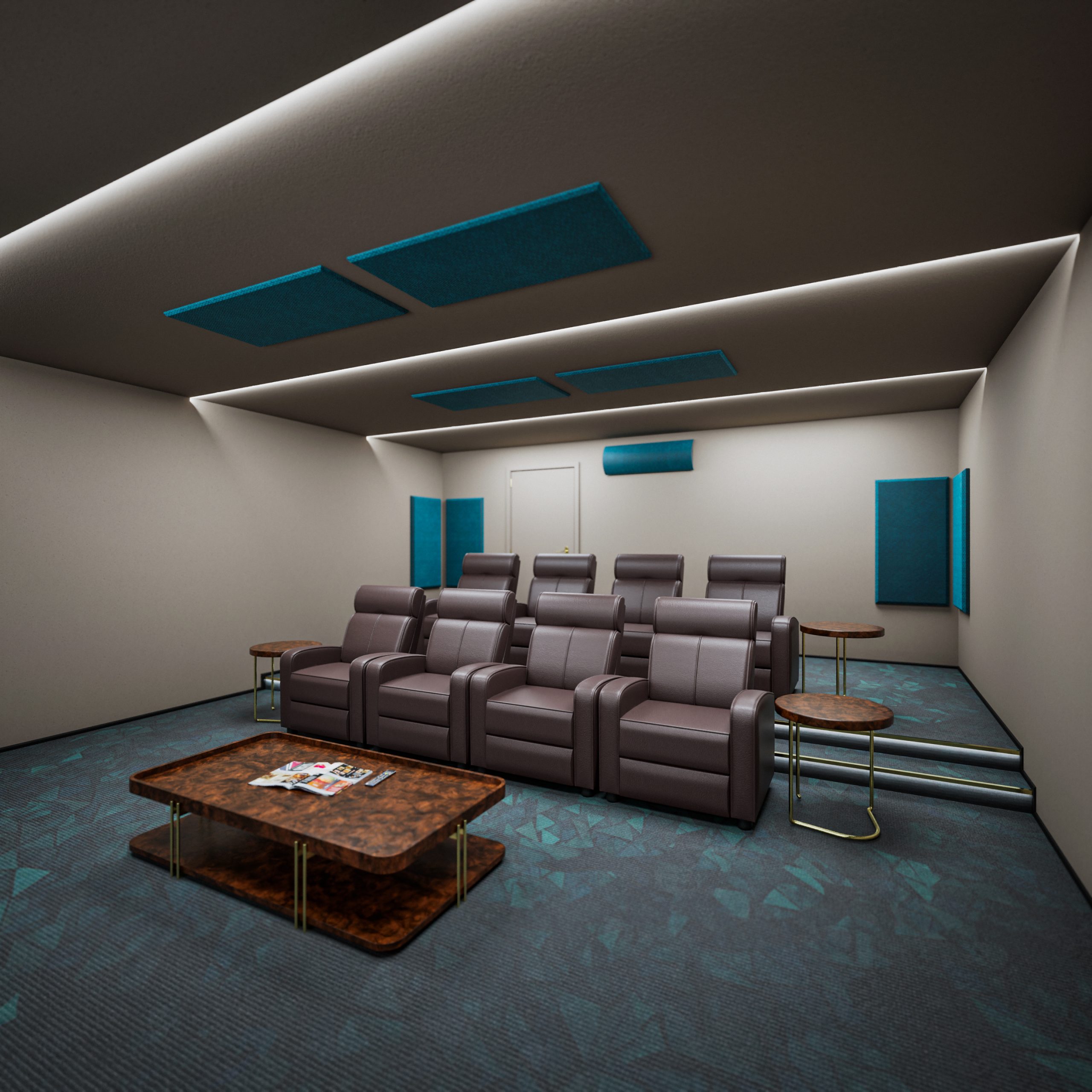
This placement is especially effective in dedicated listening rooms and home theater environments where preserving depth and realism matters.
Ceilings in Larger Rooms
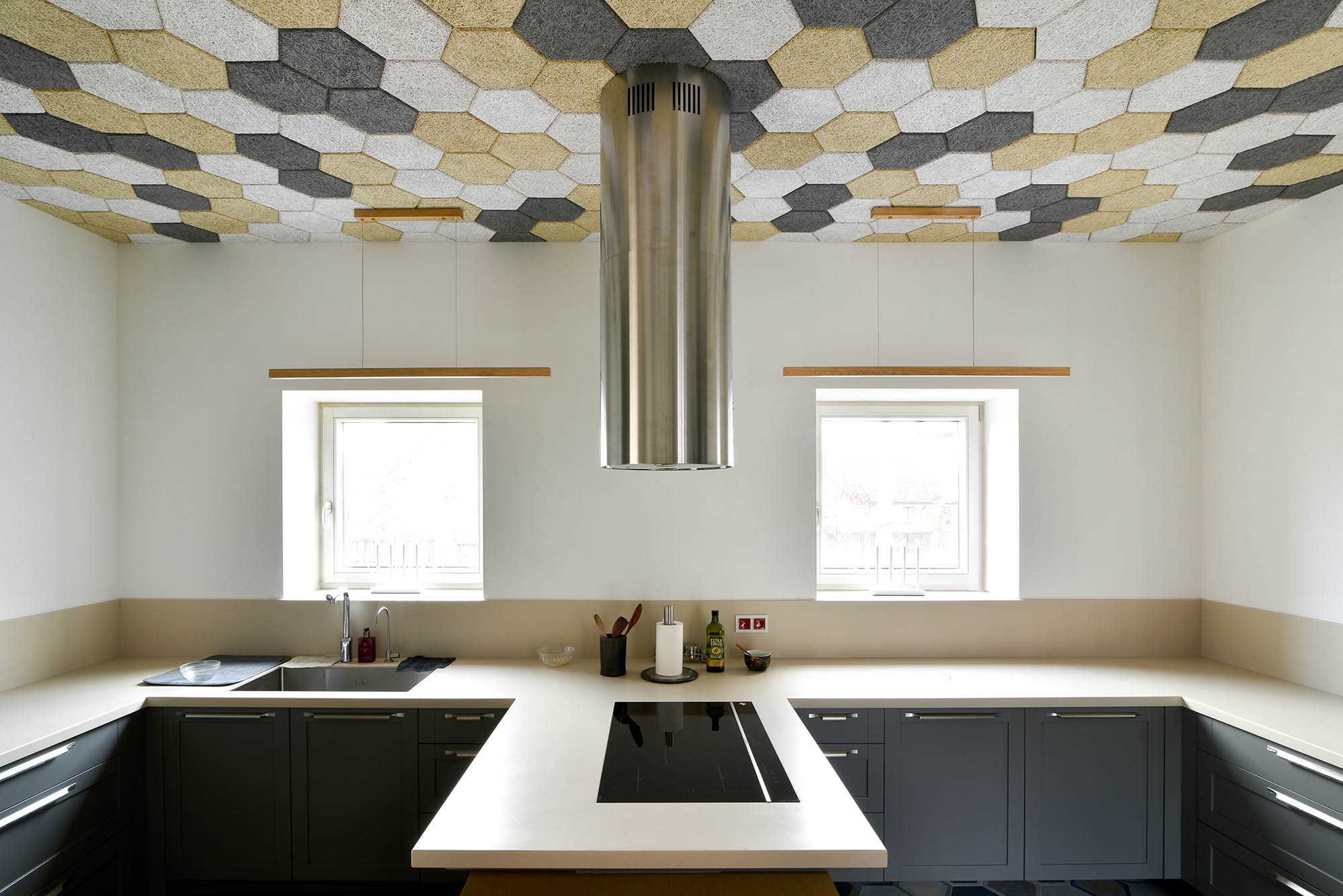
Ceiling sound diffusers work well in rooms with sufficient ceiling height and listening distance. In larger spaces, untreated ceilings can create excessive vertical reflections that reduce clarity.
Diffusive ceiling systems can maintain openness while reducing reflection buildup.
Studio Back Walls
Studio sound diffusers are frequently installed on rear walls behind mix positions. This helps preserve room energy while improving imaging accuracy and reducing comb filtering.
High-End Home Theaters
Diffuser panels for home theater spaces help create more immersive sound fields without over-dampening the room. Many theater environments sound far more natural when diffusion is integrated into rear and upper wall treatments.
Wood diffuser panels are especially popular in luxury theaters because they combine acoustic performance with a refined architectural appearance.
Where Diffusion Doesn’t Work Well
Diffusion is not appropriate everywhere.
In very small rooms, there may not be enough distance for reflections to fully develop before reaching the listener. In those cases, absorption usually performs better.
And importantly, diffusion does not provide sound isolation. If the goal is noise control between rooms, soundproofing assemblies and absorptive systems are far more appropriate than diffusion alone.
How to Combine Diffusion with Absorption
The most successful acoustic environments almost always use layered treatment strategies rather than relying on a single product type.
A balanced room might look something like this:
- Front wall: primarily absorption
- Side walls: selective absorption and diffusion
- Rear wall: heavier diffusion
- Ceiling: diffusers at first reflection points overhead or hybrid systems
- Corners: bass trapping or hybrid bass trap diffuser combinations
This approach allows each surface to perform a specific acoustic role.
Front wall absorption helps reduce front-to-back reflection buildup and improves imaging accuracy. Side walls often benefit from a combination of treatment types depending on the room dimensions and reflection behavior.
Rear walls are usually ideal candidates for diffusion because reflections arriving later in time can often be redistributed instead of removed entirely.
Ceilings are more situational. Some spaces benefit from absorptive clouds, while others perform better with hybrid assemblies that combine diffusion and absorption.
This layered strategy is also one of the best ways to answer the question of how to reduce echo without deadening a room. Too much absorption removes life and energy. Too little treatment leaves the room uncontrolled.
Balanced acoustic design lives in the middle.
Common Mistakes with Diffusion
Diffusion can produce excellent results, but there are several mistakes that regularly limit performance.
Using Only Diffusion
Some rooms require significant absorption before diffusion becomes useful. If bass buildup and strong reflections are still dominating the room, adding only diffusion may not solve the underlying issues.
Installing Diffusers in Small Rooms
Diffusion requires adequate listening distance to work properly. In compact rooms where reflections return too quickly, absorptive treatments are often more effective.
Ignoring Low Frequencies
Many people focus entirely on midrange and high-frequency reflections while ignoring bass control. Untreated low-frequency buildup can undermine otherwise good acoustic treatment plans.
Treating the Wrong Wall First
Not every wall should receive the same treatment. Early reflection points, rear walls, ceilings, and corners all behave differently acoustically. Prioritizing the wrong surfaces often leads to disappointing results.
That is why professional acoustic planning matters, especially in performance-oriented rooms.
Acoustic Geometry Has What You Need
Creating a room with balanced acoustics is rarely about adding one product and hoping for the best. Effective acoustic design comes from understanding how reflections behave throughout the entire space and selecting treatments that work together instead of competing with each other.
Acoustic Geometry offers integrated solutions that combine absorption, diffusion, and architectural design flexibility for studios, theaters, commercial environments, and residential applications. Whether you are building a dedicated listening room, refining a home theater, or upgrading a professional studio, a layered acoustic approach almost always produces better results than relying on a single treatment method.
From geometric acoustic panels and acoustic slat panels to hybrid systems and room packages, the right combination of treatments can dramatically improve clarity, balance, and comfort. Properly placed sound diffuser panels help preserve openness and spatial realism while controlling problematic reflections, making them one of the most effective tools for creating balanced, comfortable acoustic environments.
FAQ
What are sound diffusers?
Sound diffusers prevent echo by redirecting sound waves that hit them in different directions instead of allowing them to reflect.
Types of sound diffusers?
There are simple diffusers like 1D and 2D diffusers that redirect sound waves that hit them along one axis (1D) or two axes (2D). There are also quadratic and skyline diffusers which are designed with different diffusers addressing different frequency sound waves.
Diffusers vs absorbers?
Absorbers are typically made of porous materials that “catch” sound waves and do not allow them to reflect while diffusers are made of more solid materials that redirect sound waves without allowing for clear echoes.
Where do you put a sound diffuser?
Sound diffusers are most effective when placed at the primary reflective point (the first spot sound would bounce off of) of a sound source such as a speaker.
Where do you put skyline diffusers?
Skyline diffusers are most effective on the rear walls of listening areas so that they can diffuse sounds from the most prominent sound sources.
How do you use a sound diffuser?
You place the sound diffuser over the primary reflective point of a sound source.
Do sound diffusers work in small rooms?
Yes. In fact, diffusers in small rooms can make those rooms sound larger than they are, but it takes careful planning and understanding of the physics and geometry of sound.
Where should you put a diffuser in a room?
Diffusers work best when placed at a sound source’s primary reflective point.
What is the most sound absorbing material?
Soft and porous materials absorb sound best. Foam or cloth or other pliable materials with plenty of room for air will stop sound from reflecting.

About author







Add comment
You must be logged in to post a comment.